Table of Contents
ToggleSpace technology shapes modern life in ways most people don’t realize. From the GPS signal directing a morning commute to the weather forecast on a smartphone, innovations developed for space now serve billions on Earth. This space technology guide explores the systems, vehicles, and breakthroughs that make exploration beyond our planet possible. It covers the core types of space technology, their real-world applications, and the trends driving the next generation of discovery. Whether someone is curious about satellites or excited by Mars missions, this guide offers a clear foundation for understanding how humanity reaches for the stars.
Key Takeaways
- Space technology powers everyday essentials like GPS navigation, weather forecasting, and satellite internet that billions of people rely on daily.
- Satellites remain the backbone of space technology, with over 10,000 active satellites currently orbiting Earth for communication, observation, and positioning.
- Reusable rockets, pioneered by SpaceX’s Falcon 9, have dramatically reduced launch costs and transformed access to space.
- NASA’s Artemis program and commercial ventures are driving a new era of lunar exploration, with plans for sustained human presence on the Moon.
- Emerging trends like space tourism, in-space manufacturing, and commercial space stations are creating new industries and opportunities.
- Space technology innovations developed for exploration—such as memory foam and water purification systems—continue to benefit life on Earth.
What Is Space Technology?
Space technology refers to the tools, systems, and equipment designed for use beyond Earth’s atmosphere. This includes everything from rockets and satellites to space stations and planetary rovers. The field combines engineering, physics, computer science, and materials science to solve unique challenges, like operating in extreme temperatures, radiation, and zero gravity.
The origins of space technology trace back to the mid-20th century. The Soviet Union launched Sputnik 1 in 1957, marking the first artificial satellite in orbit. The United States followed with Explorer 1 in 1958. These early achievements sparked a global race that pushed space technology forward at an incredible pace.
Today, space technology serves multiple purposes. Government agencies like NASA and ESA conduct scientific research. Private companies such as SpaceX and Blue Origin focus on commercial launches and space tourism. Defense organizations use space assets for surveillance and communication. Each application demands specialized technology built to perform reliably in harsh conditions.
Space technology also drives innovation on Earth. Memory foam, scratch-resistant lenses, and water purification systems all emerged from space research. The demands of space exploration force engineers to create lighter, stronger, and more efficient solutions, benefits that often transfer to consumer products.
Key Types of Space Technology
Space technology encompasses several major categories. Two of the most important are satellites and spacecraft. Each serves distinct functions and requires specialized engineering.
Satellites and Communication Systems
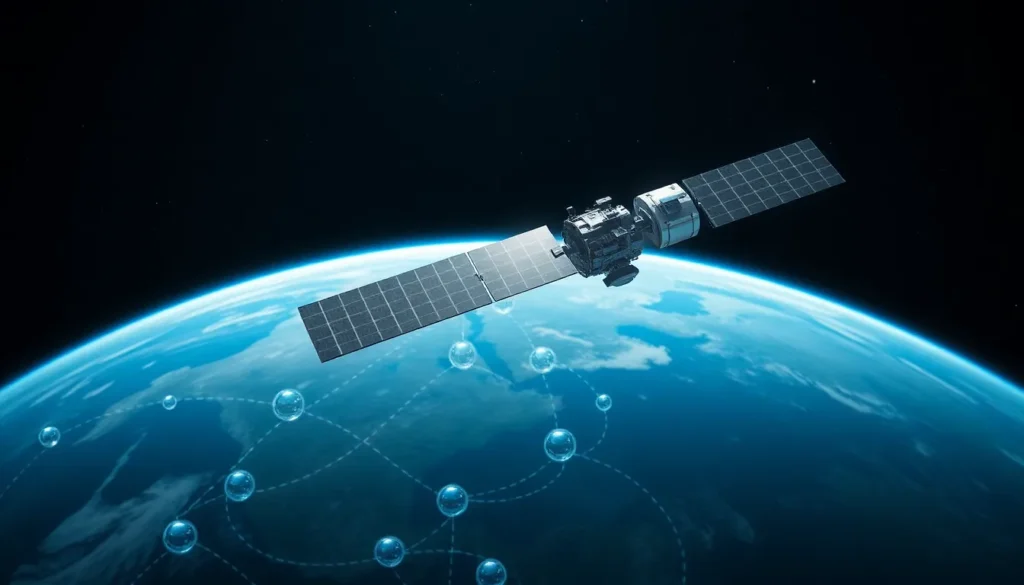
Satellites are the workhorses of space technology. These machines orbit Earth and perform tasks ranging from weather monitoring to global communication. As of 2024, over 10,000 active satellites circle the planet.
Communication satellites relay television broadcasts, phone calls, and internet signals across continents. Geostationary satellites stay fixed over one location, providing consistent coverage to specific regions. Low Earth orbit (LEO) satellites, like those in SpaceX’s Starlink network, move faster but offer lower latency for internet services.
Earth observation satellites capture images and data about our planet. They track climate patterns, monitor deforestation, and help farmers optimize crop yields. GPS satellites form a network that provides precise location data to billions of devices worldwide.
Space technology in satellite systems continues to advance. Smaller satellites called CubeSats now cost a fraction of traditional models. Companies can launch entire constellations to provide global coverage. This democratization of space technology opens new possibilities for research and business.
Spacecraft and Launch Vehicles
Spacecraft carry humans or cargo beyond Earth’s atmosphere. Crewed vehicles like NASA’s Orion capsule and SpaceX’s Dragon transport astronauts to the International Space Station and beyond. Uncrewed spacecraft include probes, landers, and rovers that explore other planets and moons.
Launch vehicles, commonly called rockets, provide the thrust needed to escape Earth’s gravity. Traditional rockets like the Atlas V use expendable stages that burn up or fall away during flight. Reusable rockets, pioneered by SpaceX’s Falcon 9, land back on Earth for refurbishment and future launches. This reusability dramatically reduces the cost of accessing space.
Space technology in propulsion continues to evolve. Ion engines provide efficient thrust for long-duration missions. Nuclear thermal propulsion may enable faster trips to Mars. Each advancement in space technology brings distant destinations closer to human reach.
How Space Technology Impacts Daily Life
Space technology affects daily routines in countless ways. Many people don’t connect their smartphone’s features to orbiting satellites, but the link is direct and constant.
GPS navigation relies entirely on space technology. A network of 31 satellites transmits precise timing signals to receivers on Earth. This system guides drivers, helps aircraft land safely, and enables delivery services to optimize routes. Without GPS satellites, modern logistics would struggle to function.
Weather forecasting depends on space technology. Meteorological satellites capture cloud formations, track storms, and measure atmospheric conditions. This data feeds into computer models that predict weather days or weeks in advance. Accurate forecasts save lives during hurricanes, tornadoes, and other severe events.
Television and internet services use space technology to reach remote areas. Satellite TV delivers hundreds of channels to rural homes with no cable infrastructure. Satellite internet connects ships at sea, aircraft in flight, and communities in developing regions.
Space technology also supports agriculture. Farmers use satellite imagery to monitor crop health, identify irrigation problems, and plan harvests. Precision agriculture reduces waste and increases yields, feeding more people with fewer resources.
Banking and finance rely on satellite-based timing systems. Stock exchanges, ATM networks, and credit card processors synchronize transactions using GPS time signals. Even a small timing error could cause millions in losses.
Space technology touches medicine too. Telemedicine connects patients in remote locations with specialists thousands of miles away. Satellite communication makes this possible, bringing healthcare to underserved populations.
Emerging Trends in Space Exploration
Space technology advances rapidly, with several trends shaping the industry’s future.
Commercial space stations represent a major shift. NASA plans to retire the International Space Station by 2030. Private companies like Axiom Space and Vast are building replacements. These commercial stations will host research, manufacturing, and tourism in low Earth orbit.
Lunar exploration is experiencing a renaissance. NASA’s Artemis program aims to return humans to the Moon’s surface. The agency plans to establish a sustained presence, including the Lunar Gateway space station. China and India have also landed spacecraft on the Moon in recent years, signaling renewed global interest.
Mars missions drive significant space technology development. NASA’s Perseverance rover searches for signs of ancient life on the red planet. SpaceX’s Starship vehicle is designed for crewed Mars missions. The challenges of interplanetary travel, radiation protection, life support, and propulsion, push engineers to create breakthrough solutions.
Space tourism has become reality. Companies like Virgin Galactic and Blue Origin offer suborbital flights to paying customers. SpaceX has sent private citizens to orbit. Prices remain high, but costs should decrease as space technology matures and flight frequency increases.
In-space manufacturing shows promise. Microgravity enables production of materials impossible to create on Earth. Fiber optics, pharmaceuticals, and advanced alloys could be manufactured in orbit and returned to Earth. This application of space technology may create entirely new industries.
Debris removal has become an urgent priority. Thousands of defunct satellites and rocket stages clutter Earth’s orbit. Space technology companies are developing systems to capture and deorbit this debris before collisions create dangerous chain reactions.